hashbank: fixing the stress of moving money
hashbank is a simple mobile bank that brings regular money and crypto together in one place. We built it for people who want clear and easy tools instead of messy, confusing apps.
I was the founding designer on this project. I built the entire design system from scratch and fixed the most stressful parts of banking like loans and crypto to make them feel easy for everyone. I stayed with the project from the very first idea until we launched and began scaling our user base.
Background
hashbank works in a world where money and rules are very serious. For two years, we built everything from the ground up to make sure the app was the easiest to understand.
We wanted to connect the safety of old banks with the new world of crypto by replacing messy interfaces with radical transparency. We moved away from confusing bank rules and gave the power back to the users so every choice felt obvious and safe.
The Problem
Building a bank from zero meant solving for extreme industry-wide user drop-off. Research shows that most users abandon digital applications when processes are slow or complex, especially in the credit sector where satisfaction is traditionally low.
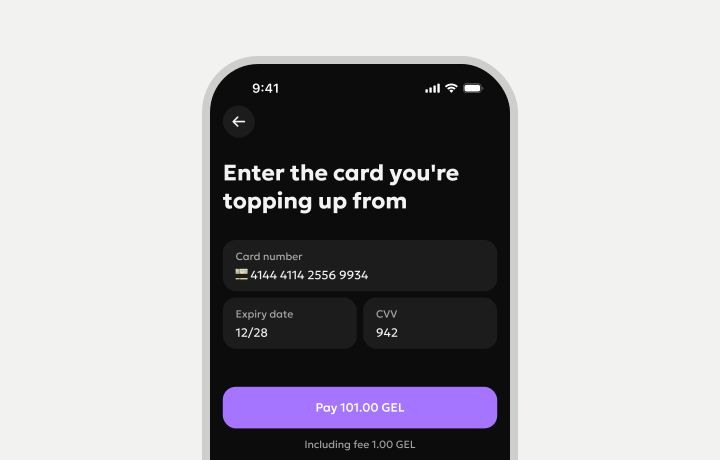
We had to eliminate the specific risks driving these drop-off: hidden fee anxiety, technical jargon, and administrative friction. Our challenge was to replace guesswork with radical transparency, translating legacy banking logic into human-centric actions to turn administrative hurdles into high-confidence choices.
What I did
I spent 24 months building the product infrastructure and design. My daily work involved close collaboration with engineers and managers to handle complex financial rules and keep the visual style consistent.
I created an atomic design system from the ground up to ensure the product could scale without breaking. This foundation was strong enough to support the app through two full redesigns, allowing the team to maintain a clean experience even as the project grew in complexity.
Loans
01 / 04
The main friction wasn't the loan itself, but the stress of guessing a request amount. Users previously had to navigate long forms without knowing if they would be approved, which created hesitation and a sense of risk.
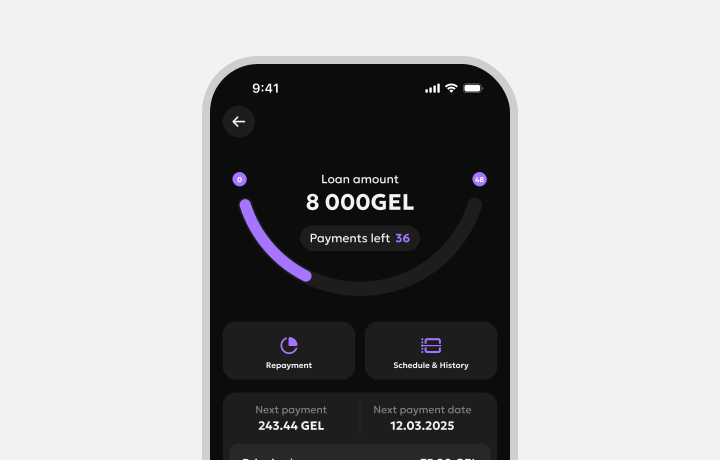
I replaced manual estimation with a real-time credit pull and a single "Check my limit" action to provide immediate certainty. By showing the approved amount upfront, we turned a complex, risky process into a simple, high-confidence choice for the user.
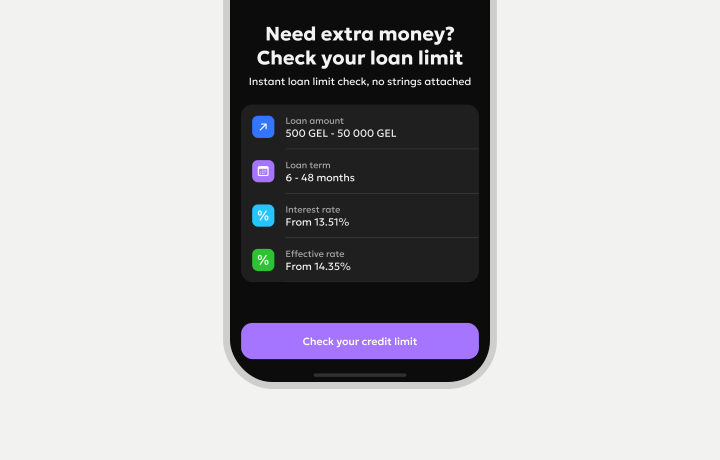
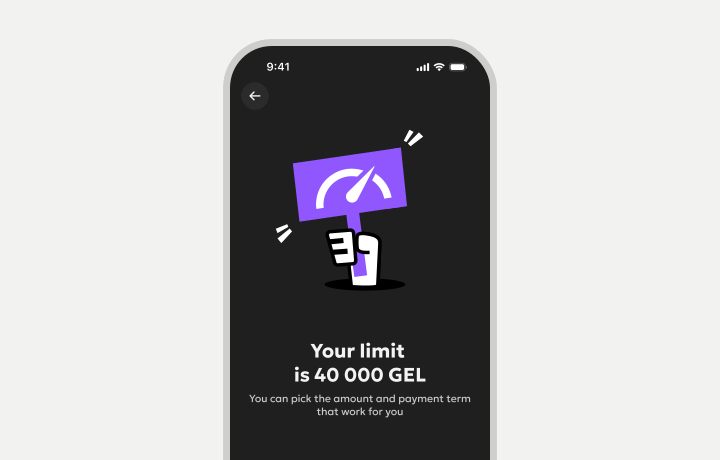
We accepted a strategic trade-off: we gathered less early data for sales-led personalization in exchange for clearer decisions and higher completion. I prioritized user momentum over data collection to ensure the flow felt frictionless and respectful of the user's time.
Deposits
02 / 04
Traditional banking makes opening a deposit feel like paperwork. For this flow, the goal was to make it feel like saving money. I focused on one clear decision at a time, allowing users to see exactly how their returns changed as they adjusted the amount.
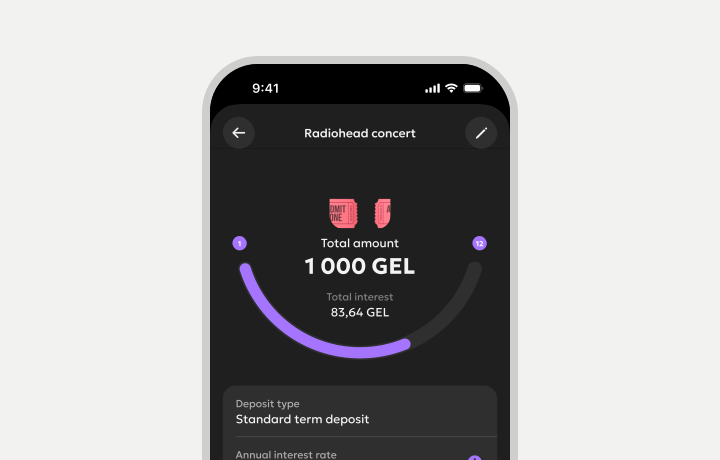
I removed the need for manual calculations or complex terms by showing real-time return updates. By focusing on clear, immediate feedback, I transformed a boring administrative task into a motivating experience that emphasized growth over paperwork.
I used progressive disclosure to show technical details only when necessary, reducing hesitation at the point of commitment. To build ownership, I added personalization like custom names and emojis. I used these small psychological wins to ensure users could set up their first deposit in under a minute.
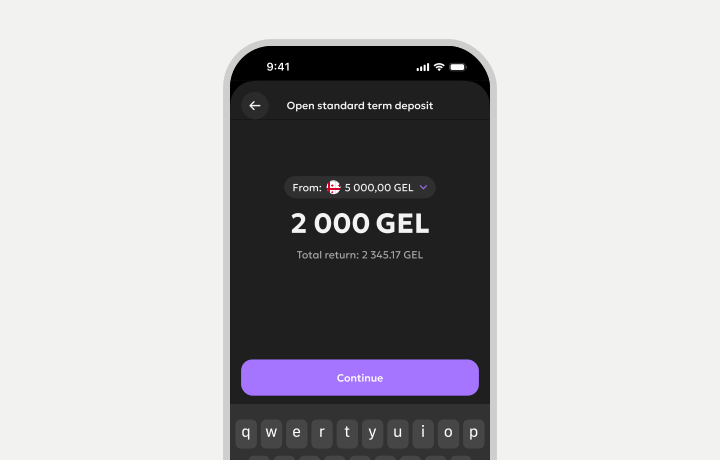
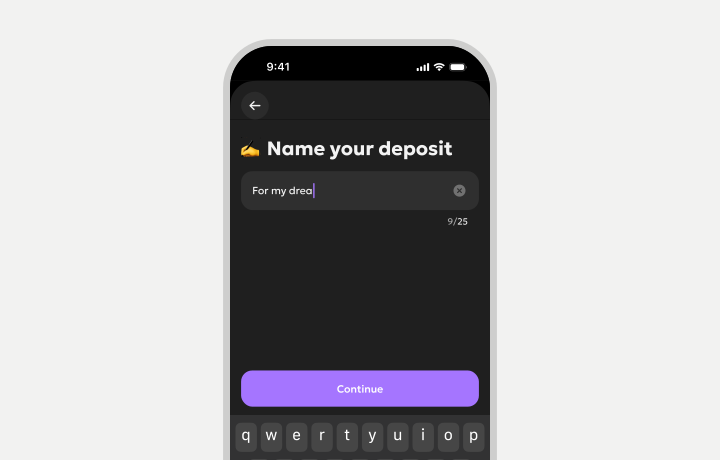
After setup, I ensured users stayed in control with daily earnings visibility and single-action withdrawals. I prioritized visibility and liquidity to maintain high engagement and long-term retention. By making the money feel accessible yet productive, I kept users committed to their personalized savings goals.
Crypto
03 / 04
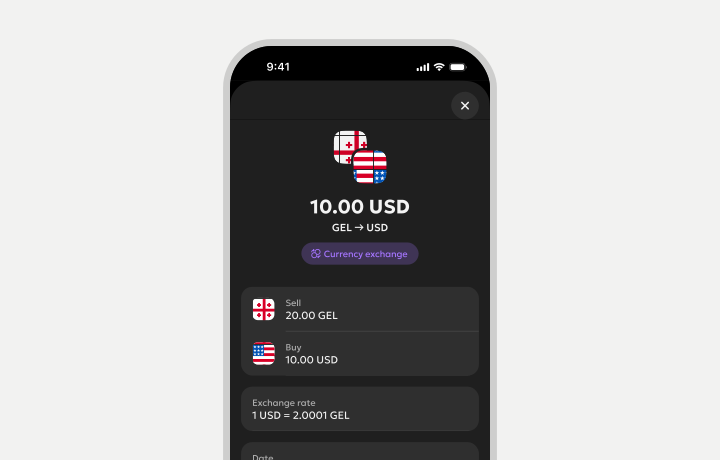
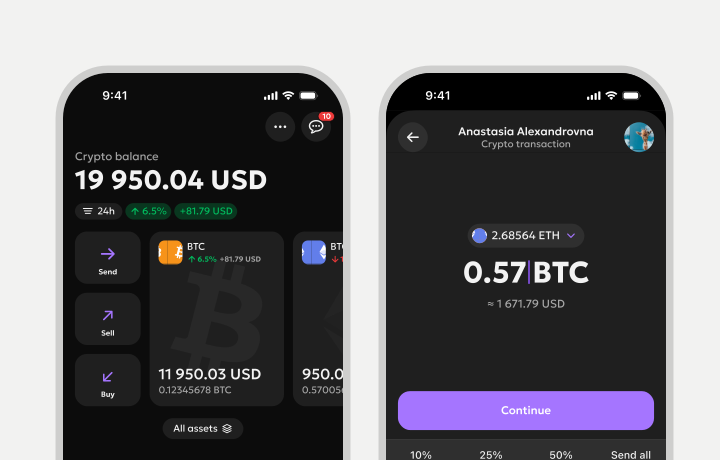
To remove technical intimidation, we made digital assets feel as predictable as a bank transfer by mirroring traditional fiat interactions. We used real-time updates for pricing directly into the exchange rate to eliminate timing anxiety.
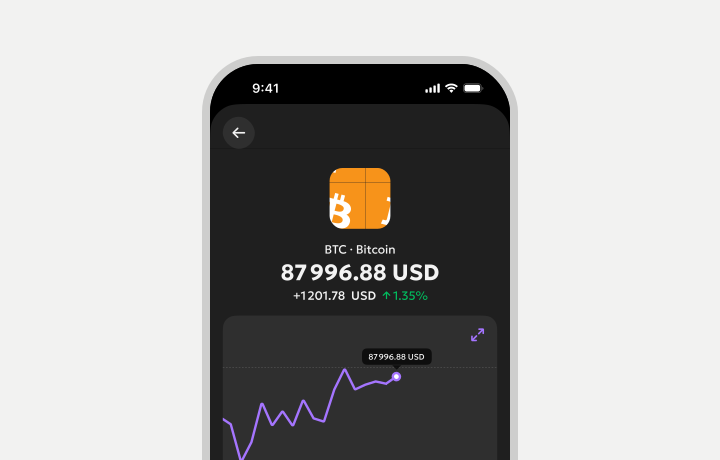
I abstracted wallet complexity so that sending crypto works via phone number or contacts, identical to a standard P2P transfer. By leveraging familiar mental models, we removed the barrier to entry for users who felt intimidated by the technical nature of blockchain.
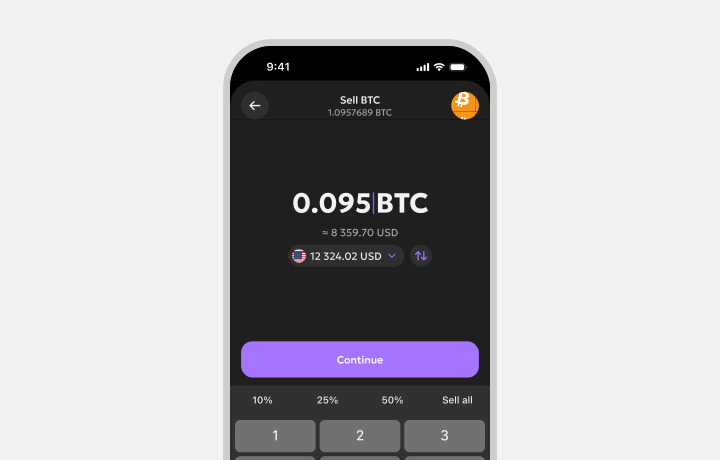
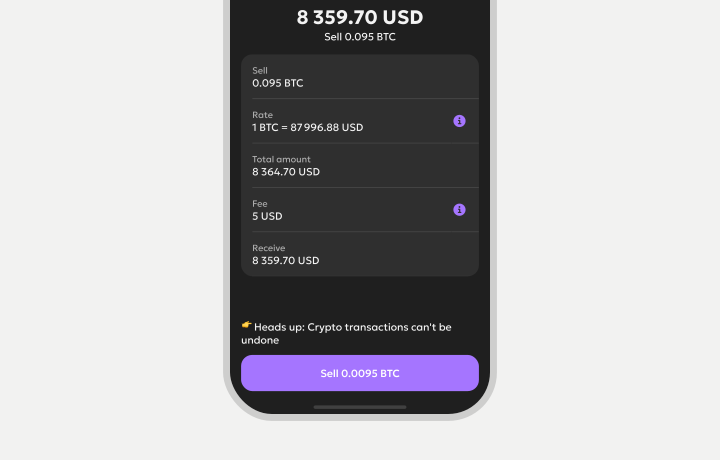
We also implemented a specific confirmation modal to ensure users only entered the ecosystem after explicitly acknowledging the risks. I designed this familiarity bridge to help traditional banking users engage with digital assets without breaking the overall system logic. While the core experience used existing banking atoms, we developed specialized high-density components like dynamic charts and auto-buy logic. I ensured the trading experience felt specialized and professional while maintaining a cohesive visual style across the entire platform.
Transfers
04 / 04
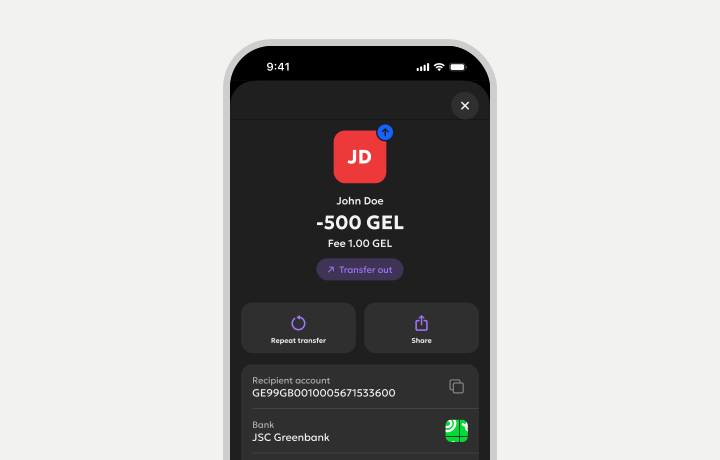
Banking transfers often trigger anxiety due to hidden costs and unclear timelines. We designed the experience to be radically transparent, ensuring the user always knows exactly what the recipient will get. By breaking down the exchange rate and total fees on a single screen, we eliminated the need for mental math.
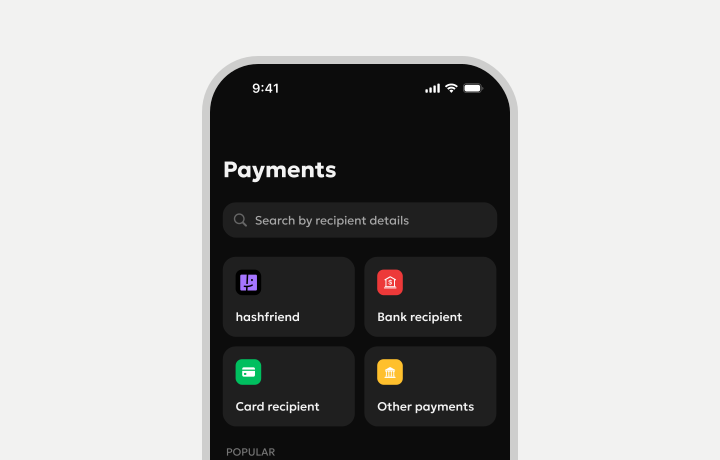
We prioritized human-centric flows by automatically adding recipients to a contacts list after the first transaction. This allowed users to organize frequent transfers by custom names rather than 22-digit IBANs. I optimized for speed by automatically detecting the fastest routing and providing clear, human-readable status updates.
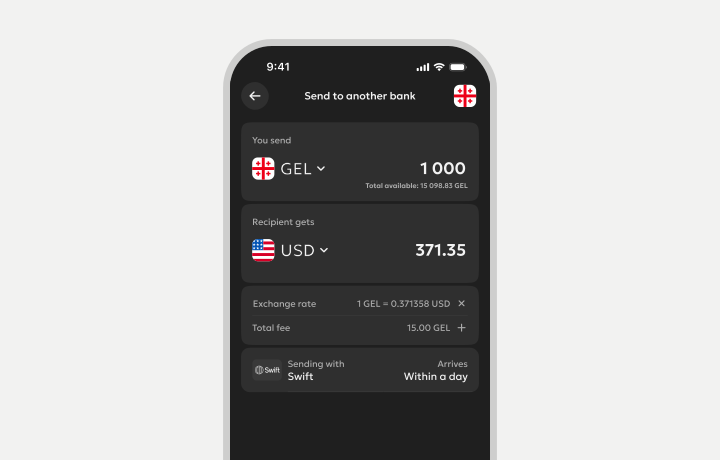
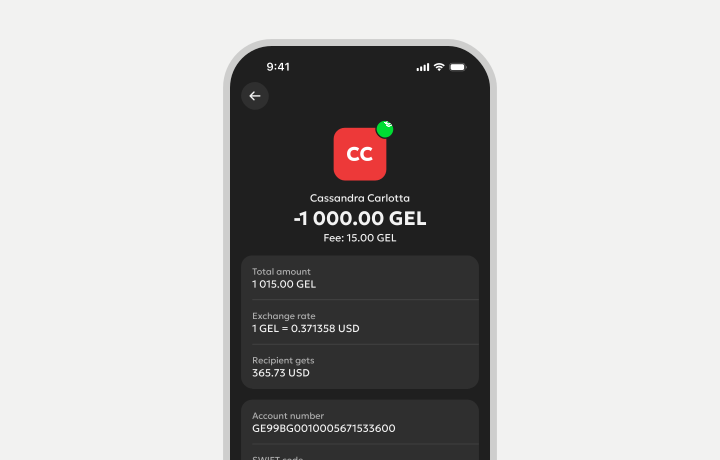
We accepted a strategic trade-off by using a unified component for all transfer types. While this slightly increased cognitive load for local moves, it ensured architectural stability and faster development. I prioritized a robust, scalable system that reduced average completion time and simplified long-term maintenance.
Results
In 24 months, the platform grew from a concept to a leading financial application in the region. Success was driven by more than just features; it was defined by the trust built with a growing, active user base.
By prioritizing cognitive speed and transparency, we turned complex banking into a high-confidence experience. The product now stands as a scalable, system-driven ecosystem that proves clarity is the ultimate driver of adoption.
4.9
Average rating maintained across the App Store and Play Store.
80%
Component parity between iOS and Android platforms
<20s
Average time to send money via contacts within Georgia.
31%
Monthly retention rate for users holding crypto assets.
~60s
Average time for users to set up their first deposit from scratch.
24.6%
Monthly retention for users who personalized their savings goals.
Key Takeaways
The biggest hurdle wasn't the UI it was the jargon gap. We realized that as builders, we understand the mechanics, but users do not. Success came from answering unasked questions and translating complex banking logic into human-centric actions.
The Atomic Design System was a strategic business asset, not just a component library. Building it early gave the business the agility to re-brand in days and launch features in weeks. I treated the design system as a technical engine that directly drove business efficiency and cost savings.
Executing two full redesigns taught us that architecture must be fluid to survive growth. We prioritized scalability over perfection, ensuring that as the product grew from zero, the system remained stable and intuitive. I focused on building a flexible foundation that allowed the product to evolve without technical or visual debt.